Podcast Ep06 – LOTO & Workplace Stress
TSD Podcast Episode 05
Check out the Frontline / NPR story “Coal’s Deadly Dust” here: https://www.pbs.org/wgbh/frontline/film/coals-deadly-dust/
TSD Podcast 2019 Ep04
TSD Podcast 2019 Episode 03
Success vs Failure and a Method of Reflection
When it comes to internal motivation for a professional, I feel that safety has some unique aspects. The discussion last month was about Success vs Failure. I had a lot more questions than answers. When it comes to working in the safety industry our customers are varied and sometimes have very different ideas of what deliverables or items are important. Our company, our employees, the environment, and the community are just a few groups that rely on good judgement, proper ethics, and proper education from the safety person. When it comes to managing or understanding the cultures that make a safety person seek success or avoid failure, there are many aspects and variables that can be evaluated and understood.
The first step to managing is understanding. Something that I enjoy doing as part of a group activity or even as a method of self-reflection is to conduct a survey of defining success and defining failure. It has been my policy to share my results with the team and allow members of the team to share on a voluntary basis with others. I do required that I get to see the results either as part of a one-on-one or through a text correspondence, which ever make them most comfortable. I even allow typed sheets with no name to be left in my office. I will say, though, that has never happened. They should feel comfortable expressing their opinions. Your team should have a level of comfort and safety with you for this to be effective. If you are a leader of others, I have found this exercise to be insightful and value added in understanding your team and their principles.
By understanding and observing the team, it becomes more apparent of their grouping in success seeking vs failure avoiding. I hope this is helpful and insightful in better engaging and understand your team. There are so many impacts that affect the life of a safety person. Culturally, organizationally, and individually, the safety person is impacted. This shapes the response to issues, the implementation of policy, and general attitude. It is should be the goal of good leadership to observe and impact these variables when possible to create the most effective HSE process.
Here is the basic format of the exercise:
DEFINING SUCCESS ACTIVITY
suc·cess fail·ure
səkˈses ˈfālyər
noun noun
accomplishment of a purpose lack of success.
INSTRUCTIONS/BACKGROUND:
A key component of a lean system to work towards a goal. This is usually phrased as “what does good look like?”
Once someone knows how “good” looks and is defined, the process can be changed to become closer and closer to good through improvement.
The same can be said for success. Unless we define success, we cannot know if we achieved it.
In this exercise, I am asking you to define success for you as an individual contributor to define what you see success is for the organization in EHS.
With every endeavor there is also a chance for failure, and that must also be defined. I am again going to ask that you to define failure for you and the organization around EHS.
For each question, there should be one to three answers that are no longer than a sentence long. Success and failure should be simple, gradable metrics.
These will not be shared among the group unless you choose to share them. I will use these as part of our one-on-one discussions to help us focus on where the direction needs to be heading.
ACTIVITY: DEFINE SUCCESS
1) Using only one sentence, create one to three definitions of what success is for you as an individual contributor to EHS.
2) Using only one sentence, create one to three definitions of what success is for our organization for EHS
ACTIVITY: DEFINE FAILURE
1) Using only one sentence, create one to three definitions of what failure is for you as an individual contributor to EHS
2) Using only one sentence, create one to three definitions of what failure is for our organization for EHS
TSD Podcast Episode 02
Podcast: Episode 01: Safety Training Concerns
When I say safety culture, what comes to mind?
When you think of your organization approach to safety, what picture comes to mind? As a safety professional or someone who is committed to safety, take your personal opinions away. Take the 50,000 foot view of the culture. If your safety climate had a mascot what would it be? What would it look like? Was it good? Was it bad? Was it funny? Was it sad?
Your organization is a series of micro cultures of the pockets personal experience. The individuals working each day are a key determination of how that culture functions and its motivation. Here is another vision question: On any given day, how you categorize or picture the typical leader in your organization? What is their mascot? What is their theme music?
These are strange questions, but they create an interesting outcome of what your safety climate is telling you and how that culture is affecting key results.
I love the lean process. Here are a few quotes from W. Edwards Deming that will help illustrate the point that I have not yet made. 🙂
“A bad system will beat a good person every time.”
“Your system is perfectly designed to give you the results you’re getting”
In my experience, there are really four key organization that are present based on the people that are leading those pockets of influence.
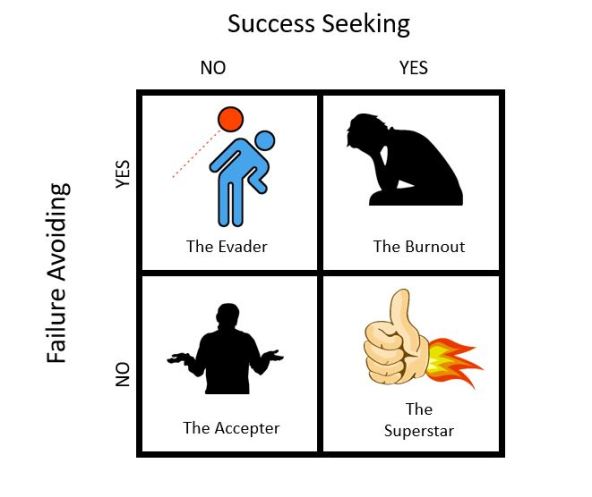
The Superstar
The Evader
The Accepter
The Burnout
I hope that we can all agree that a safety person or even a safety team cannot be the key safety cultural influencers in the organization. It is the leadership and the front line supervisors that make those decisions and drive the safety climate of a site, company, or organization. Each day with each decision, the safety culture is shaped and molded into the presentation and personality of those leaders.
Now think of which of these four categories your supervisors fall into. What about the company? What about the organization? How does each feed into the other? How do these traits affect the overall safety system that is in place? What does it mean for the future of the safety system?
I have lots of questions. These are the same questions that I ponder each day. It is through understanding that we as safety people can start to make adjustments in how we manage. This drives the evolution of the safety systems.
For the next few months, I will focus more on these drivers of success and/or accepters of failure, some of the tools I have used, and some of the adjustments that can be made to help adjust, improve, or accelerate the culture of the team.
One Simple Improvement for Safety Training
Mind blowing idea: Not all training is created equal
You probably already knew that, though.
Imagine a simple idea that would lead to better employee engagement, improved training, and safer behaviors. Sadly, it is a commonly overlooked aspect of health and safety training. The answer is to let people know they are receiving training that is for their safety.
I am a huge fan of the research conducted by Dr. Kristina M. Zierold. Some of the works focus on the young workforce as they enter into the labor market for the first time. They receive training, usually on-the-job-training. They are told these are the ways things should be done. But there is no distinguishing the safety aspects of the training from just the way to do the job. In some cases, there is no safety training at all. That, though, is for another time.
So, imagine entering the workplace for the first time. You are given training that is based on the work that you are doing. This is not a bad thing. It helps in building real world cognitive learning of how to perform the job. But, there is not distinguishing what parts of the job are there to protect you, what parts of the job are to help in quality to the customer, or what parts of the training impact other functions. This is where things get sticky.
Safety is not an inherent trait. Safety is something that is learned and observed. With later generations not as much working manual labor at home, being part of shop classes, working on farms, etc. there is a loss of that “common sense” approach to knowing safe from unsafe. As they enter the workplace there then has to be a focus on teaching safety.
For someone new to the workplace, safety systems and protections can appear to slow work down or even seem cumbersome if one does not understand why they are doing it. For a new employee if they do not know it is a safety system, then it is something that could be ignored. They may hear the talk that safety is the most important thing they do every day, and that may very well be true. The trouble is that if they do not know that something is in place for their personal health and safety, then how do they know that they need to always use it.
That is why it is absolutely critical that when training is conducted, the safety features are pointed out. The trainer has a very important role is setting the new employee up for success not only productively but in creating that first feeling of the safety climate. In some places, the standard work can be posted right in front of the workstation. The safety items can be highlighted in green or have a green cross beside those important protective steps. They still need to be trained, educated, and understand why it is a safety feature.
How do we make our safety training more effective? Make sure that as we conduct the training, we communicate effectively the procedures, processes, equipment, and PPE that is place to help protect our employees. Safety training has to exclusively dedicated to the health and wellbeing of our team.
 Mark A French, Ph.D, CSP, EMT