We are asking the questions, but do we care about the answers?

As part of many safety audits, there are times where employees and supervisors are brought together to answer questions about safety programs, experiences, and feelings. The process is to ask open ended questions to draw out the employees to talk about what they are witnessing and experiencing in the workplace. The goal of these audit protocols should be to help the sites leadership see from the outside what the culture and people on the inside are creating. 

This process is perceived as an outside group taking a true interest in the goals and feelings of the people at the site. So the real question from these audit processes is: If we are asking the right questions and getting the true answers; what are we doing with the data?

What happens if the findings are that the culture is broken and workforce is burned out? Is there blame assigned to the site or even worse to the HSE Manager? If the site is showing some real development with people and culture is the site rewarded and recognized? If there are real issues that come up that require resources or capital outside the sites ability, is the audit team helping support the work to get those resources allocated to the site?

Too many times (not only in audits) people are asked the questions, the data is collected, there is a presentation of the information, there are some short term exchanges on change and process, but there is not sustainable, culture focused, and appropriate solutions provided.  

What this is really about is if we are really ready to ask the questions. If the organization is ready to make the plunge and ask the culture questions, there has to be a method to address and create real solutions. As safety professionals, creating culture not only in the workforce but in the leadership and management is one of the greatest challenges. The answers are more important than the questions when it comes to building trust among the workforce. I once heard trust defined as empathy combined with action. The questions create a sense of empathy but the real challenge is turning that into action. And one could say that real empathy creates action. 

Creating a sense of trust in the workforce is one of the key components of Maslow’s hierarchy. Without trust, there is no basis for people to give the best. Without trust, there is no giving more than the minimal. Without trust, there is dysfunction to a higher degree. When we ask the questions and we act toward a solution, trust is created. We create a culture in which we can find solutions. We can create a culture where the questions are no longer as important as the issue are apparent as part of the dynamic continual improvement process. 

So when the audit comes to town, the questions are asked, and the answers are given; there must be a process to create solutions to the cultural needs. If the solutions are limited to a site or group and not evaluated on a inter-organizational level, there is a significant loss of sustainability and effectiveness.  

Can you predict safety culture

I commute about an hour one-way for my job. It is open road travel so I have time for thinking and listening to books. I am a huge sci-fi buff. So, my recent addiction is Isaac Asimov’s Foundation Series. In the series, a mathematician names Hari Seldon has created a new science called psychohistory. This science is able to predict the patters of large groups of people to be able to see how society is to react and even predict large milestones of the future.

While listening the series, it really made me think that as a safety person, how can I predict where culture is going and how various stimuli would affect the safety climate of an organization? What if I could even go beyond the typical leading and lagging indicators or even population surveys of safety culture questions? Could there really be a way to absolutely predict where a culture is going?

On a more individual level, I have seen where similar events at a work place create very different futures. When I browse through news articles about injuries or environmental releases, there are those companies that change the way they do business when those extreme stimuli occur. And then, there are those that appear to never get their act together. Why is that? Leadership is a very quick and mostly truthful answer. It is the leaders of an organization that set the path and tone for where the culture will go next. If they do not take a stand to make a definitive change, then change is hard to create.

Beyond the leaders, though, are the people who make the change, or lack thereof, real. It is through their work and deeds that safety and environmental issues are handled first hand. They have power to make change at the grass roots level. So, from a predictive standpoint, back to square one. The culture of an organization is more than a leader and it is more than the people. Culture is as tangible as it is intangible. Culture is both qualitative and quantitative. Culture is as simple as you believe it to be and as complicated as the people who make it up.

Even though there is no one-size-fits-all approach to measuring safety culture, here are a few ideas that can make the process more transparent and hopefully better to predict.

1) Is there someone in the organization that is really in touch with the culture and is willing to tell you the hard truths?

It can be easy to allow a few data points to allow an individual to be swayed. Many times I have either under or over reacted to a situation simply because the information I received led to me to think I made the right approach. It is because I have listen to any/all opinions of culture that I heard. I have found, though, that in an organization there is someone who is very observant that has some really good insight to what the culture is feeling. Seek that person out and listen. But never that be the only voice you hear. Let it be an indicator of where to go looking.

2) Do you have an annual culture survey?

Using a Likert scale approach to the overall organization is a good process for trending the culture. A quick ten-question survey once a year can give a different approach to viewing the culture.

3) Are you walking and talking . . . And LISTENING?

The more data that is taken in, the better the process to understand the data can be. It is very qualitative, but invaluable to a safety professional. For example: During a walk, a discussion begins about how nothing ever gets fixed. Using the idea, a statistical measure of safety related repairs is created, published, and reviewed. This can create a culture that no longer feels ignored but empowered to use the process to create more safety repair requests.

4) Are you really seeking to understand the culture and can you control it?

Some of the lessons that a culture will show are tough ones to hear. Sometimes in a large organization, the local culture is being influenced by a larger and harder to handle overarching culture. Nonetheless, we cannot simply throw our hands in the air and give up. One of my favorite quotations is “Be the change that you wish to see in the world” by Mahatma Gandhi. I choose how I am going to react and act each day. Many times I am not pleased with my choice but each day I try harder. Even if we cannot change the large, we must endeavor for make the change we can.

5) Do you have committees that have members that can give voice to the site?

Never underestimate the power of your HSE committees. They have a voice in both as a committee member and when they are out performing their normal duties. As a committee member they should be talking about the culture and opportunity that they observe and hear. When they leave the committee they should be working to make improvements and to be an advocate for the HSE process. Empower that team and use its ability to make change.

We do not yet have an exact science like psychohistory, but we have tools at our disposal to help us engage and measure our culture. It is through the culture that we reach the individuals. It is through the individuals that we make the impact.

Nature and Nurture in Safety: Part 6

What happens when a person with a high tolerance for risk joins an organization that creates a culture of profit before safety?
Nature + Nurture = Outcome

Negative + Negative = Danger
A high tolerance for risk is not a bad personal trait. It is part of who that person is. The problem can occur with they are placed into an organization that has no priority for behavioral safety. Suddenly, the process to make the supervisor happy or to get accolades from the company is to get the job done faster, cheaper, and with fewer resources. This creates danger in its highest form. Imagine a company that chooses to save money through not performing training, chooses to no provide the tools that are needed to do the job safe,and chooses to push employees for more. In some cases that creates burnout and a complete lack of employee satisfaction. 

For those who lack the experience to know the expectations that should be in place for occupational safety this is a dangerous process and creates excessive and unnecessary risk. Again, defining safety nature as negative is not saying someone chooses to get hurt. It is simply a state of being, unknowing, or acceptance/tolerance of higher levels of risk. Once of the great dangers that of new workers. They have not been trained on the basic principles of occupational safety and so they are reliant on the company to provide that information. In the case of a company that has a negative safety culture, this set the stage for disastrous results.

Kristina Zierold of the University of Louisville has performed some really nice research on teenagers entering the workplace and the hazards associated with their work. In brief her work showed that teenagers when entering the workforce thought that any on-the-job training was the same as safety training. Much of the training was either observation of the job they were to perform or videos. This left teenagers in a risky situation without the knowledge that was needed to perform the work as safely as they could. This shows the risk that comes from not having a good safety nature and entering an organization that has a negative nature. 

It is necessary to provide the proper training to those as they enter the workforce and even as early as school. It is necessary to create a culture of safety as early as possible. Creating a natural safety personality is not really that natural. It comes through learning and experience. 

Nature and Nurture in Safety: Part 5

When evaluating what is considered a negative behavior (nature), it suits to first define that aspect of safety behavior first. This is not to imply that people got to work and choose to get hurt. This is far from the truth. There are those, naturally, who have a much larger acceptance of risk. They do not see the inherent danger that is associated with tasks in the workplace. When using the term negative nature, it not to create a connotation of a terrible employee who is seeking unsafe work or has a desire to get hurt. The truth is that this person may not have had the experience to lead to proactive safety measure and has a higher tolerance for the acceptance of personal risk. 

Nature + Nurture = Outcome

Negative + Positive = Emerging Safety
As an example, a positive safety nature would be akin to always following the speed limit while a negative nature would be to always drive 20+ over the speed limit. There risk is perceived as different with various levels of acceptability.

In the case of a negative safety nature (behavior) combined with a positive safety nurture (organizational culture) it is the “why” that matters most.

This is someone who has not seen the purpose of the safety programs in past is looking for the aspects of why these new rules or processes are going to add value to them. The use of case studies, real life examples, and the basis for how the risk is real creates value to those who have not had that exposure previously. 

This whole process creates an opportunity for the individual to having an emerging safety experience. They were unaware of the risk and that the risk can be further minimized to make sure they safe. The why is what matters most. They need to know that the risk is not worth it. They should understand that the risk is real, and the cultural expectation is that the risk is avoided through the use of the programs and procedures that are in place. 

The goal is that there is an awakening of individual safety accountability and a desire to take that new knowledge home with them. It is through the application of the newly learned safe processes that the individual can take that information home to use it in a way to create intrinsic value in their personal life. Safety is one of the few key processes in the work place that also creates a great value at home.

There are some practical application of quality and production processes at home, but safety is the one that can make a biggest impact for the employee at home. The ability to prevent fires, use a ladder properly, prevent electrocution, avoid falls, know about chemicals, etc. etc. etc. creates real value at home not only for the individual. These are skills that the employee can teach their friends and family. This is where safety creates true and last value through an emerging safety process.   

Nature and Nurture in Safety: Part 4

“Science may have found a cure for most evils; but it has no remedy for the worst of them all – the apathy of human beings” – Helen Keller
Nature + Nurture = Outcome

Positive + Non-Existent = Apathetic Safety
Continuing on the theme of nature versus nurture, what happens when someone has a positive safety behavior and enters an organization that is neither positive or negative? The company has no safety culture at all. There is lasissez-faire attitude toward the safety culture of the site. 

Nature versus nurture is a complex process of what someone is born with and what they are exposed to. There is significant debate as to the amount each contributes to the whole of a person. When this process is look at from a person and organizational stand point, there are opportunities to better understand how these processes interplay for safety. When various internal behaviors (nurture) are encountered with various organizational cultures (nurture), there are varieties of ways the sum of the parts create an outcome.

When there is a positive nature and a non-existent nurture, it creates a neutral safety organization. In other words and individual has the desire to work safe and the organizational culture does not care either way. So what would this non-existent culture look like:

– There is basic regulatory training. It is conducted in the most efficient manner

– There are not shift discussions on safety

– Safety is only important when there is an incident, usually an injury

– There is no proactive process to measure safety

– The key measurement is LTIR and TCIR. 

The company does care about safety, but from a high level it is based on keeping insurance rates low and preventing regulatory interference. What is means is that there is risk for the employees and there is no external motivation to create systems to make it better. Safety is up to the individual.

Each day the personal will make a choice. They are not discouraged from making the right choice such as setting up a lockout-tagout or confined space entry process. There is also no discouragement from not performing them either. This creates a significant false sense of security. 

As an individual they are making internal choices based on their own process for evaluating risk. Some are much more willing to take risk than others. This can create an illusion that everything is fine with the safety programs and processes. From a legal standpoint, they are able to show training and written programs. A walk of the process may show some opportunity, but not blatant mishandling of safety processes. 

What this has created is apathy. There is not desire to get better. There is no influence to make it worse. In a negative culture, it can create a kind of backlash where people are working to get more attention on their issues. They are focused on the items that make the environment unsafe. They may be focused on trying to create some change. The neutrality of the safety program is one that is creating the idea that things are okay, so why worry to much about making improvement.

Apathy in safety is a scary idea. When a company believes that it is “good enough” when it comes to safety and it stops focusing on continuous improvement, there is a huge opportunity for risk. The Chemical Safety Board has many examples of good companies that felt they had gotten their safety program to where it should be and stopped pushing to make it better. The apathy created the opportunity for major disasters. 

To combat apathy as part of a safety culture, there has to be a focus on continuous improvement. There needs to be a feedback loop so that the program can be evaluated and those that are served by that program have the opportunity to give input to the improvement cycle. There needs to be proactive metrics that are not only collected but are part of a system that helps to drive positive cultural engagement and change. When it comes to safety culture, apathy is dangerous.

Sometimes Your Safety Culture Cannot be Quantified

As I started my PhD journey, I really felt comfortable with numbers. My background of chemistry and business made numbers familiar useful to me. I was fully planning to run a quantitative research plan. I was going to collect the data, crunch the numbers, and report the findings.
I was about one year ago that the idea was turned completely over. The lack of safety knowledge from a psychological standpoint is limited. There is not a ton of information that relates to the behaviors and processes that really create culture. The professor offered that I should really look at qualitative work.
As I have been diving deep into the work, research, and processes, I have found that when talking about safety culture sometimes it makes perfect sense to see things from a qualitative standpoint. What are the themes, philosophies, feelings about safety without grading them through a survey?
I then wondered: As a safety professional I am always justifying my work through numbers and analysis and yet behaviors and culture sometimes have no numbers associated with them . . . Why is that?
I think there are a number of reasons that as safety professionals, we turn to the numbers rather than the underlying culture. The first reason is that we are always presenting the business case to justify our job, our work, and our processes. Want to implement a new safety mechanical assist? We inherently know that we will be answering questions: How much will it cost? How many injuries have their been? Is there quantifiable risk? How much would the workers’ compensation claim cost? What’s the return on investment? Are there time savings? Will it improve the audit score? Will it improve the employee survey scores? How much time will it save?
We have turned safety in to a business metric rather than the legal and behavioral process that it really is. Here is my disclaimer: Having safety as a business justification is not a bad thing. There are many positive aspects of integrating safety into the business and cost metrics of an organization. BUT, it does not work all the time.
There are limitations to always quantifying safety data. The surveys can be skews based on other cultural aspects of a company. If the employees do not feel the survey is effective or will make a difference, the answers may not be accurate. The process of affixing a dollar amount to safety improvements or the lack thereof does not take into account the full view of morale and culture. If every improvement has to yield cost, it may not even seem worth the effort to work the solution. There can be a great sense of apathy because it is hard to create the business (quantitative) justification for the work. 
We as safety people have had to learn to speak business. Most of the people that we report to or justify our work to may not understand the people aspects of what we do. They understand cost, productivity, inventory, quality. The soft people part of the process is not part of their everyday vocabulary. We have adapted out processes to be better effective as leaders through learning their language and presenting the data that will best help us effectively do our job.
There are times where as safety experts, we have to rely on the qualitative skills of learning a culture and seeing behaviors for what they are. Of course this is not a full proof process either. One of the hardest aspects of learning psychology is eliminating my bias while performing qualitative work. I have learned that I have many biases. I want the information that I am seeing, hearing, and evaluating to fit my pre-conceived notions of what the culture is. There are also times to see trends and there are times to say that that the information may be an outlier. The most difficult part is knowing what to accept and what to need more evaluation for. Qualitative work does not solve a problem. It only helps to evaluate the experiences, feelings, and behaviors. We want to always be fixing rather than learning. Too many times small interview sessions will yield big changes or opinions. Sometimes they are right and sometimes they are not. One of the biggest obstacles that I have encountered in studies qualitative psychology is taking the information, getting rid of the bias, and seeing the elements for what it is.
The overall idea is that we cannot simply rely on one method of evaluating behaviors, cultures, and programs. The simple nature of being human makes it more complex than just counting the numbers and calculating the statistical certainty.

Nature and Nurture for Safety Part 3

When it comes to behaviors, the idea of nature and nurture always becomes a debatable position. In some ways, managers and companies like the idea of blaming nature for work place injuries. I hate the saying “can’t fix stupid.” Too many times in my career, I have heard that from supervisors and managers who feel this is the end all, be all for explaining their poor departmental safety performance.

The reality is that safety behavior is much more complex an issues than the simplicity of blaming the individual for any and all items.

Screen Shot 2016-03-23 at 8.43.05 PM

To better illustrate the point that the culture of the organization is a significant factor, the evaluation of someone who has a good safety nature can be affect by a climate of negative nurture is a prime example.

Imagine a new employee to a company. This employee has generally a strong safety knowledge and comes from a company that had true value of safety behaviors. The employee has not just joined a company that has not safety culture, the culture is actually negative. This is the culture that case studies are made of.“Get it done and get it done yesterday.” “No matter what never shut the equipment down.” “You don’t need tools, your hands are tools enough.”

This individual may first think that they can influence the culture of the site. What happens, though, once that does not work? In a large scale, there are three possible outcomes: The employee becomes a whistle blower, the employee leaves the organization, or the employee watches out for self and becomes defensive. The first outcome is really not a behavior that can be evaluated, but a reasonable option.

In the next two options, the employee will feel out of place. Their is little more that can demoralize a workforce than a blatant disregard for employee safety. Maslow’s theory of needs states that the idea of safety is one of those necessary needs people must have to grow. If the company denies this fundamental right, the employee will seek other opportunities that will meet that need. Ultimately, the company looses a valuable resource.

The next option is where the company will get the bare minimum. There is no desire to contribute. There is no desire to make the it the best it can be. There is no desire to find better methodology. This culture erodes into not just safety but productivity and quality. This is a situation where the company has made a choice to say the employees are not really part of the team. Imagine a sports coach believing that he can win a championship without his players. That is unbelievable, right? Well, this is in principle saying the same thing, “we don’t need our employees to be successful.”

The culture of a company is just as much a factor for behaviors as that of the individual. They have a relationship that works with or against one another. The complexity of blame should not be the go-to choice for safety behaviors and culture. There has to be a total evaluation of how the culture and the inherent behaviors are working systemically.


Nature and Nurture for Safety: Part 2

Overall, the debate of nurture vs nature is not one that I am will to address. There are, though, some aspects of nature and nurture in the way safety becomes behavioral and organizational.

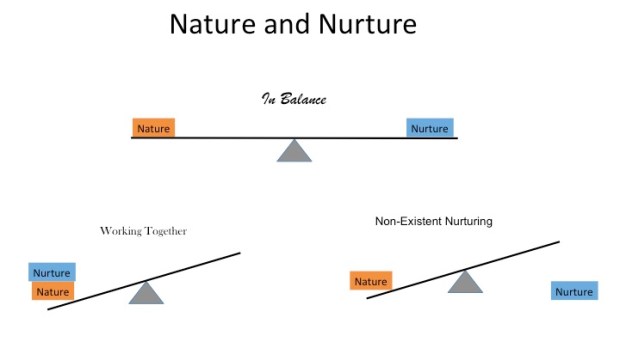
For the sake of simplicity, nature will be defined as someone’s general safety philosophy before entering the workplace. Nurture will be defined as the way the company or organization creates safety or how they influence employees in regards to safety

Screen Shot 2016-03-23 at 8.43.05 PM

When nature is positive and nurture is positive, the outcome is a total safety experience. The individual comes to an organization with an innate ability and conscious of how to work safe and avoid unnecessary risk. The organization has also create a culture where safety is a top priority and the systems are in place to keep safety in the forefront. When these two items come together, it is nothing short of safety magic!

There is an individual that has a strong desire to see risk and find ways to mitigate that risk, all the while the organization is seeking ways to be more self-diagnosing and culturally open to continuous improvement. These two build a process in which they feed off each other.

As the individual’s nature leads to better ways to be safe, the nurture of the organization takes those methods and makes them systemic. The best methodology is found and then spread as a best practice. Since the nurturing organization is positive, they give the credit to the individual. Not only does this make the individual seek more opportunities, it invigorates others that may not have a natural sense of risk avoidance to seek new ways to overcome safety issues. The cycle self-perpetuates and creates an entire team seeking new and better ways to engage in keeping people safe.

This is a best case scenario. It creates a negatively skewed bell curve in which the measurement is safety behaviors per person. This creates an organization in which more people that average are exhibiting safety behaviors.

Nature and Nurture for Safety: Part 1

There is plenty of debate of the exact science, implications, and magnitude of nature and nurture.

To summarize for the sake to time and sanity, there are certain traits that people are born with that can hold some influence over who they are. Nurture comes in to whether or not a person chooses to go with or against their nature.

Nature is not a bad thing. Sometimes the traits we are born with are something we should nurture and use for the purpose of being better. Someone who is born with a naturally athletic build and then uses nurture to improve to become great at their talent should be encouraged.

For the discussion of safety, some may have a natural tendency to weigh risk and adapt a healthy approach to that risk. Or someone, may be completely prone to high risk taking with little thought. This is where  a robust safety attitude of an organization makes the impact.

Slide1

There are many ways safety of an organization and at a very personal level can make big differences. An organization should be aware of the implications of not having a consistent and positive safety system in place. Do not confuse positive safety system with “warm fuzzy.” A good safety system is a proper balance of rights, responsibilities, training, education, accountability, ownership, consistency, and compassion.

So in other words the simplistic terms of “positive” and “negative” are much more robust in connotation through this set of discussions. A negative aspect of someone’s nature in regards to safety does not necessarily mean they are blatantly dangerous nor does a negative safety nurture mean a company is trying to overtly hurt people. There are many nuances and variations that can be in play with this very complex topic (see first paragraphs). The goal is to simply look at a very high level the outcome of when nature and nurture come together in the evolution of an occupational safety schema.

I am simply going to define nature as the way someone is before they enter the workplace in regards to safety. Nurture will be defined as the safety environment of the organization.

Nature can only be positive or negative while nurture can be positive, negative, or non-existent. A non-existent nurture is simply an organization that neither has fully embraced a total safety culture nor has it completely ignored safety. It is organization safety purgatory which could also be defined as an organization that feels it is “good enough” and has no reason to make or seek improvement to safety systems or culture.

Now that the terms have been defined as much as can be for such a topic, here is what it will represent for the upcoming discussions:

Screen Shot 2016-03-23 at 8.43.05 PM


Five Stages of Behavioral Change: Part 7

In 1983,  Prochaska & DiClemente theorized that there was process of making behavioral change. This five step model was developed while evaluating how people changed from unhealthy to healthy behavior. From a safety standpoint, there are many similarities in how behavioral change is made. Safety is about choices and behaviors that come with a healthy approach to the workplace and risk.

Slide1


If I were to summarize the past few weeks worth of posts, it would be that culture takes time to create. Behaviors are not created or changed quickly.

Stage 1: Time = Unknown

Stage 2: Time = 6 months

Stage 3: Time = 30 days

Stage 4: Time = 6 Months

Stage 5: Time = Ongoing

For the entire course of the process of change, time = 13 months. Over one year to make the change!

An analogy to think of is to compare culture and behavior as a flower. The flow grows and blooms at its appropriate time. Not sooner, not later. The flower can be encouraged through having the right environment. It may help the flower grow faster and stronger. But, it is still at the right time when the conditions are ready.

Creating a new culture of behavior in an organization takes time. There are ways the the environment can help to speed the process, but the process still has to take place at its own time and means. The goal of safety leadership is to provide the right environment to assure that the environment is ripe for the culture to emerge and take root. The process is worth the time and effort as once it is in place in the correct way, it can help in creating a self-sustaining cycle of improvement.