Nature and Nurture in Safety: Part 4

“Science may have found a cure for most evils; but it has no remedy for the worst of them all – the apathy of human beings” – Helen Keller
Nature + Nurture = Outcome

Positive + Non-Existent = Apathetic Safety
Continuing on the theme of nature versus nurture, what happens when someone has a positive safety behavior and enters an organization that is neither positive or negative? The company has no safety culture at all. There is lasissez-faire attitude toward the safety culture of the site. 

Nature versus nurture is a complex process of what someone is born with and what they are exposed to. There is significant debate as to the amount each contributes to the whole of a person. When this process is look at from a person and organizational stand point, there are opportunities to better understand how these processes interplay for safety. When various internal behaviors (nurture) are encountered with various organizational cultures (nurture), there are varieties of ways the sum of the parts create an outcome.

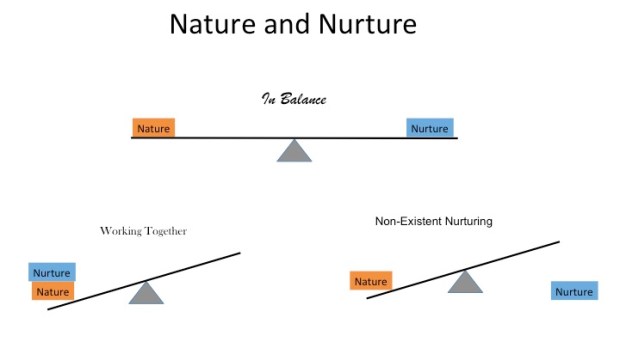
When there is a positive nature and a non-existent nurture, it creates a neutral safety organization. In other words and individual has the desire to work safe and the organizational culture does not care either way. So what would this non-existent culture look like:

– There is basic regulatory training. It is conducted in the most efficient manner

– There are not shift discussions on safety

– Safety is only important when there is an incident, usually an injury

– There is no proactive process to measure safety

– The key measurement is LTIR and TCIR. 

The company does care about safety, but from a high level it is based on keeping insurance rates low and preventing regulatory interference. What is means is that there is risk for the employees and there is no external motivation to create systems to make it better. Safety is up to the individual.

Each day the personal will make a choice. They are not discouraged from making the right choice such as setting up a lockout-tagout or confined space entry process. There is also no discouragement from not performing them either. This creates a significant false sense of security. 

As an individual they are making internal choices based on their own process for evaluating risk. Some are much more willing to take risk than others. This can create an illusion that everything is fine with the safety programs and processes. From a legal standpoint, they are able to show training and written programs. A walk of the process may show some opportunity, but not blatant mishandling of safety processes. 

What this has created is apathy. There is not desire to get better. There is no influence to make it worse. In a negative culture, it can create a kind of backlash where people are working to get more attention on their issues. They are focused on the items that make the environment unsafe. They may be focused on trying to create some change. The neutrality of the safety program is one that is creating the idea that things are okay, so why worry to much about making improvement.

Apathy in safety is a scary idea. When a company believes that it is “good enough” when it comes to safety and it stops focusing on continuous improvement, there is a huge opportunity for risk. The Chemical Safety Board has many examples of good companies that felt they had gotten their safety program to where it should be and stopped pushing to make it better. The apathy created the opportunity for major disasters. 

To combat apathy as part of a safety culture, there has to be a focus on continuous improvement. There needs to be a feedback loop so that the program can be evaluated and those that are served by that program have the opportunity to give input to the improvement cycle. There needs to be proactive metrics that are not only collected but are part of a system that helps to drive positive cultural engagement and change. When it comes to safety culture, apathy is dangerous.

Nature and Nurture for Safety Part 3

When it comes to behaviors, the idea of nature and nurture always becomes a debatable position. In some ways, managers and companies like the idea of blaming nature for work place injuries. I hate the saying “can’t fix stupid.” Too many times in my career, I have heard that from supervisors and managers who feel this is the end all, be all for explaining their poor departmental safety performance.

The reality is that safety behavior is much more complex an issues than the simplicity of blaming the individual for any and all items.

Screen Shot 2016-03-23 at 8.43.05 PM

To better illustrate the point that the culture of the organization is a significant factor, the evaluation of someone who has a good safety nature can be affect by a climate of negative nurture is a prime example.

Imagine a new employee to a company. This employee has generally a strong safety knowledge and comes from a company that had true value of safety behaviors. The employee has not just joined a company that has not safety culture, the culture is actually negative. This is the culture that case studies are made of.“Get it done and get it done yesterday.” “No matter what never shut the equipment down.” “You don’t need tools, your hands are tools enough.”

This individual may first think that they can influence the culture of the site. What happens, though, once that does not work? In a large scale, there are three possible outcomes: The employee becomes a whistle blower, the employee leaves the organization, or the employee watches out for self and becomes defensive. The first outcome is really not a behavior that can be evaluated, but a reasonable option.

In the next two options, the employee will feel out of place. Their is little more that can demoralize a workforce than a blatant disregard for employee safety. Maslow’s theory of needs states that the idea of safety is one of those necessary needs people must have to grow. If the company denies this fundamental right, the employee will seek other opportunities that will meet that need. Ultimately, the company looses a valuable resource.

The next option is where the company will get the bare minimum. There is no desire to contribute. There is no desire to make the it the best it can be. There is no desire to find better methodology. This culture erodes into not just safety but productivity and quality. This is a situation where the company has made a choice to say the employees are not really part of the team. Imagine a sports coach believing that he can win a championship without his players. That is unbelievable, right? Well, this is in principle saying the same thing, “we don’t need our employees to be successful.”

The culture of a company is just as much a factor for behaviors as that of the individual. They have a relationship that works with or against one another. The complexity of blame should not be the go-to choice for safety behaviors and culture. There has to be a total evaluation of how the culture and the inherent behaviors are working systemically.


Nature and Nurture for Safety: Part 2

Overall, the debate of nurture vs nature is not one that I am will to address. There are, though, some aspects of nature and nurture in the way safety becomes behavioral and organizational.

For the sake of simplicity, nature will be defined as someone’s general safety philosophy before entering the workplace. Nurture will be defined as the way the company or organization creates safety or how they influence employees in regards to safety

Screen Shot 2016-03-23 at 8.43.05 PM

When nature is positive and nurture is positive, the outcome is a total safety experience. The individual comes to an organization with an innate ability and conscious of how to work safe and avoid unnecessary risk. The organization has also create a culture where safety is a top priority and the systems are in place to keep safety in the forefront. When these two items come together, it is nothing short of safety magic!

There is an individual that has a strong desire to see risk and find ways to mitigate that risk, all the while the organization is seeking ways to be more self-diagnosing and culturally open to continuous improvement. These two build a process in which they feed off each other.

As the individual’s nature leads to better ways to be safe, the nurture of the organization takes those methods and makes them systemic. The best methodology is found and then spread as a best practice. Since the nurturing organization is positive, they give the credit to the individual. Not only does this make the individual seek more opportunities, it invigorates others that may not have a natural sense of risk avoidance to seek new ways to overcome safety issues. The cycle self-perpetuates and creates an entire team seeking new and better ways to engage in keeping people safe.

This is a best case scenario. It creates a negatively skewed bell curve in which the measurement is safety behaviors per person. This creates an organization in which more people that average are exhibiting safety behaviors.

Nature and Nurture for Safety: Part 1

There is plenty of debate of the exact science, implications, and magnitude of nature and nurture.

To summarize for the sake to time and sanity, there are certain traits that people are born with that can hold some influence over who they are. Nurture comes in to whether or not a person chooses to go with or against their nature.

Nature is not a bad thing. Sometimes the traits we are born with are something we should nurture and use for the purpose of being better. Someone who is born with a naturally athletic build and then uses nurture to improve to become great at their talent should be encouraged.

For the discussion of safety, some may have a natural tendency to weigh risk and adapt a healthy approach to that risk. Or someone, may be completely prone to high risk taking with little thought. This is where  a robust safety attitude of an organization makes the impact.

Slide1

There are many ways safety of an organization and at a very personal level can make big differences. An organization should be aware of the implications of not having a consistent and positive safety system in place. Do not confuse positive safety system with “warm fuzzy.” A good safety system is a proper balance of rights, responsibilities, training, education, accountability, ownership, consistency, and compassion.

So in other words the simplistic terms of “positive” and “negative” are much more robust in connotation through this set of discussions. A negative aspect of someone’s nature in regards to safety does not necessarily mean they are blatantly dangerous nor does a negative safety nurture mean a company is trying to overtly hurt people. There are many nuances and variations that can be in play with this very complex topic (see first paragraphs). The goal is to simply look at a very high level the outcome of when nature and nurture come together in the evolution of an occupational safety schema.

I am simply going to define nature as the way someone is before they enter the workplace in regards to safety. Nurture will be defined as the safety environment of the organization.

Nature can only be positive or negative while nurture can be positive, negative, or non-existent. A non-existent nurture is simply an organization that neither has fully embraced a total safety culture nor has it completely ignored safety. It is organization safety purgatory which could also be defined as an organization that feels it is “good enough” and has no reason to make or seek improvement to safety systems or culture.

Now that the terms have been defined as much as can be for such a topic, here is what it will represent for the upcoming discussions:

Screen Shot 2016-03-23 at 8.43.05 PM


Five Stages of Behavioral Change: Part 7

In 1983,  Prochaska & DiClemente theorized that there was process of making behavioral change. This five step model was developed while evaluating how people changed from unhealthy to healthy behavior. From a safety standpoint, there are many similarities in how behavioral change is made. Safety is about choices and behaviors that come with a healthy approach to the workplace and risk.

Slide1


If I were to summarize the past few weeks worth of posts, it would be that culture takes time to create. Behaviors are not created or changed quickly.

Stage 1: Time = Unknown

Stage 2: Time = 6 months

Stage 3: Time = 30 days

Stage 4: Time = 6 Months

Stage 5: Time = Ongoing

For the entire course of the process of change, time = 13 months. Over one year to make the change!

An analogy to think of is to compare culture and behavior as a flower. The flow grows and blooms at its appropriate time. Not sooner, not later. The flower can be encouraged through having the right environment. It may help the flower grow faster and stronger. But, it is still at the right time when the conditions are ready.

Creating a new culture of behavior in an organization takes time. There are ways the the environment can help to speed the process, but the process still has to take place at its own time and means. The goal of safety leadership is to provide the right environment to assure that the environment is ripe for the culture to emerge and take root. The process is worth the time and effort as once it is in place in the correct way, it can help in creating a self-sustaining cycle of improvement.


Five Stages of Behavioral Change: Part 6

In 1983,  Prochaska & DiClemente theorized that there was process of making behavioral change. This five step model was developed while evaluating how people changed from unhealthy to healthy behavior. From a safety standpoint, there are many similarities in how behavioral change is made. Safety is about choices and behaviors that come with a healthy approach to the workplace and risk.

Slide1

Stage 5: Maintenance(monitoring)
People at this stage changed their behavior more than 6 months ago. It is important for people in this stage to be aware of situations that may tempt them to slip back into doing the unhealthy behavior—particularly stressful situations.

It is recommended that people in this stage seek support from and talk with people whom they trust, spend time with people who behave in healthy ways, and remember to engage in healthy activities to cope with stress instead of relying on unhealthy behavior.

(https://en.wikipedia.org/wiki/Transtheoretical_model)

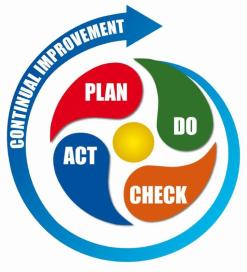
From a lean standpoint, this is the part where continuous improvement is key. There is no such thing as having the perfect safety program. For any program, if it is stagnant; it is not functioning correctly. The safety culture has to be continually reviewed and improved. This is part of a plan-do-check-act process.

pdca

A culture has been establish, the focus changes to more of finding small ways to continually cultivate the culture and behaviors.

Screen Shot 2016-02-21 at 6.52.22 PM

Over time, there are time of great cultural improvement and then times where the culture has to be maintained. After a series of gains and sustainment, the process finally yields a culture that the organization wants. This would be a self-actualized team. From the graph above, the line stays close the the desired culture but it is slowly rising. When zoomed in the gains are very similar but more on a micro-scale. There is still a series of continual improvements.

Like any other behavior or culture, safety is a series of small improvements overtime. Maintenance on a culture is not maintaining the behavior but finding incremental ways to continually engage and motivate the team.

Five Stages of Behavioral Change: Part 5

In 1983,  Prochaska & DiClemente theorized that there was process of making behavioral change. This five step model was developed while evaluating how people changed from unhealthy to healthy behavior. From a safety standpoint, there are many similarities in how behavioral change is made. Safety is about choices and behaviors that come with a healthy approach to the workplace and risk.

Slide1

Stage 4: Action(currentaction)’
People at this stage have changed their behavior within the last 6 months and need to work hard to keep moving ahead. These participants need to learn how to strengthen their commitments to change and to fight urges to slip back.

People in this stage progress by being taught techniques for keeping up their commitments such as substituting activities related to the unhealthy behavior with positive ones, rewarding themselves for taking steps toward changing, and avoiding people and situations that tempt them to behave in unhealthy ways.

(https://en.wikipedia.org/wiki/Transtheoretical_model)

In the last post, the causal relationship of the Gemba (go and see) and communication was discussed.

Screen Shot 2016-02-20 at 8.26.17 PM

This is the phase where the change is new. The organization is working to create the new behaviors and culture. The work is to keep the team focused on the goal that has been set. The organization has to keep the team motivated and focused. Small wins have to be celebrated! When people do not see the benefit of the change, they will lose the motivation to continue.

Here is a real example that is near and dear to me. I make the decision to loose some weight through diet and exercise. After a couple of weeks of feeling tired and deprived, I step on the scale and see no change. Suddenly, the desire for a cheeseburger and milkshake is overwhelming.

Just in the example, it is our job to help keep the motivation flowing. This can be through peer-to-peer interactions, congratulatory meetings, or even through showing of some metrics that people may not have seen before.

In the example of the weight loss issue, maybe the focus should be to track blood pressure or resting heart rate to show that the body is changing. The single data point of weight lead me to believe that the process was ineffective or at least not worth the effort invested.

Safety cultural change is worth the investment. The injury rate may not immediately make a large difference, but are we really measuring the right metrics. How many observations helped eliminate hazards? How many safety work orders were completed? Are there annual cultural surveys that could be affected? Are people more willing to talk about issues openly with ideas of resolution? There are many ways to measure change in a way that helps keep the team motivated. The organization has to be committed to this new change or it will fall to wayside as another failed attempt. This is also why change has to be taken in small sections. It is hard to keep many programs fully motivated all at the same time.

Through many turnarounds and culture experiences in safety, I have an analogy to summarize how too many changes too fast can get out of control.

“It like spinning plates on poles, except you’re in maze”

Screen Shot 2016-02-20 at 8.39.55 PM

There are many changes coming: once we get one going, we forget where the ones were before and we are not sure which ones are coming next.

The ultimate goal of this phase is motivation:

The change is worth it!

We can do it!

We are willing to invest fully in this change!

Five Stages of Behavioral Change: Part 4

In 1983,  Prochaska & DiClemente theorized that there was process of making behavioral change. This five step model was developed while evaluating how people changed from unhealthy to healthy behavior. From a safety standpoint, there are many similarities in how behavioral change is made. Safety is about choices and behaviors that come with a healthy approach to the workplace and risk.

Slide1

Stage 3: Preparation (pre action)
People at this stage are ready to start taking action within the next 30 days. They take small steps that they believe can help them make the healthy behavior a part of their lives. For example, they tell their friends and family that they want to change their behavior.

People in this stage should be encouraged to seek support from friends they trust, tell people about their plan to change the way they act, and think about how they would feel if they behaved in a healthier way. Their number one concern is: when they act, will they fail? They learn that the better prepared they are, the more likely they are to keep progressing.

(https://en.wikipedia.org/wiki/Transtheoretical_model)

Even though this theory focuses on personal health, there are many aspects that align with making a cultural safety change.

Notice that this phase of change takes 30 days. How many times is a company willing to plan for 30 days before making a change?

In defense of quick change, there are time when a safety issue emerges in which change is immediately necessary. For these types of changes, the culture has to come through less planning and more action. For example, it is discovered that a glove change can prevent significant lacerations. The change comes immediately. So how does the company create the culture of this new glove use? They go and inspect frequently. In lean terms this is called a “Gemba.” You go the to place where the work is taking place and see what is happening. This is where coaching and mentoring really makes the difference. This is where you help people understand the whys and hows of the new policy. There will be times where people need reminded of the policy. There will be also times where people need to be appreciated for following the policy. Communication is key!

Speaking of communication, that is what preparation is all about. A company is about to roll out a behavior based safety program or a employee participation committee or a new way of making reports of potential issues, the next thirty days is all about communication. Have you over communicated the message? That is still not enough. To develop the cultural shift that is coming, the team needs to hear the message over and over. They need to see the message in many formats and in many forums. There also needs to be opportunity for questions and understanding. The more planning that is put into place the less action that has to take place. There is always some amount of communication and Gemba as part of any change, but they do have a causal relationship.

Screen Shot 2016-02-20 at 8.26.17 PM

The goal during this phase of the process is to communicate and help the behaviors become adjusted to the new culture. Behavior and culture is not created over night. It is a process of helping a team adjust through proper planning and communication for the change that is about to happen.

Five Stages of Behavioral Change: Part 3

In 1983,  Prochaska & DiClemente theorized that there was process of making behavioral change. This five step model was developed while evaluating how people changed from unhealthy to healthy behavior. From a safety standpoint, there are many similarities in how behavioral change is made. Safety is about choices and behaviors that come with a healthy approach to the workplace and risk.

Slide1

Stage 2: Contemplation (consciousness)
At this stage, participants are intending to start the healthy behavior within the next 6 months. While they are usually now more aware of the pros of changing, their cons are about equal to their Pros. This ambivalence about changing can cause them to keep putting off taking action.

People here learn about the kind of person they could be if they changed their behavior and learn more from people who behave in healthy ways.

Others can influence and help effectively at this stage by encouraging them to work at reducing the cons of changing their behavior.

(https://en.wikipedia.org/wiki/Transtheoretical_model)

One day while I was complaining about not having the resources, tools, or financing that I needed, my supervisor told me jokingly, “Anyone could do this job with the right tools. We hired you because we thought you were the type of guy who get the job done without any tools.”

It was soon after that event that he and I developed a plan to get the resources we needed to create a safety turnaround. As funny and sarcastic as his statement sounded, how many safety people know this to be the truth of the organization they work for without the knowledge that they will be given what they need to be successful. So many times, I hear the comments of how companies want to create a total safety culture. They roll out behavior safety observations but there is a key factor that is forgotten. The observation processes are not just about finding fault in actions. The process yields opportunity to engage employees to find unsafe conditions that need to be fixed. A safety observation process is not the “free” safety fix. It is actually a cost intensive process as it engages people to start thinking about the items that need to be addressed and the tools that are needed to create success. Once items are identified, the expectation is that those items will be addressed. If the organization then chooses the path to not correct those items, they lose credibility and negatively affect the culture of the team.

So, all of that information is the background necessary to explain the topic of this posting. Safety culture cannot happen overnight. It is a process that has to come to fruition through processes put into place. Contemplation is the phase where people really start thinking that the situation needs to change. They are starting to notice that safety can be better, and they start making plans of what and how the organization needs to change. The behavior based safety observation process can be a tool that engages the team to start contemplating the idea of a safer work environment. The pivotal point in this process is whether or not the contemplation leads to planning (the topic of the next post). If the team begins the journey where they are progressing to contemplate the ideas that come with an integrative safety system, those ideas have to be cultivated and acted upon. If the organization chooses to ignore this important milestone in behavioral change, then the culture will not progress. It will regress.

When a team or individual starts to ask the questions of how make the job safer, it is vitally important that those cognitive processes are taken seriously by the organization. This cultural contemplation has to used to develop the plan. The road to behavioral change is one that requires energy, resources, and tools. Without that support, behavioral change is only subconscious idea that cannot be realized by the organizational culture.

Five Stages of Behavioral Change: Part 2

In 1983,  Prochaska & DiClemente theorized that there was process of making behavioral change. This five step model was developed while evaluating how people changed from unhealthy to healthy behavior. From a safety standpoint, there are many similarities in how behavioral change is made. Safety is about choices and behaviors that come with a healthy approach to the workplace and risk. There is a process for behavioral change, and it does not occur overnight.

Slide1

Stage 1: Precontemplation (Subconsciousness)
The model consists of four “core constructs”: “stages of change,” “processes of change,” “decisional balance,” and “self-efficacy.”

People at this stage do not intend to start the healthy behavior in the near future (within 6 months), and may be unaware of the need to change. People here learn more about healthy behavior: they are encouraged to think about the pros of changing their behavior and to feel emotions about the effects of their negative behavior on others.

Precontemplators typically underestimate the pros of changing, overestimate the cons, and often are not aware of making such mistakes.

One of the most effective steps that others can help with at this stage is to encourage them to become more mindful of their decision making and more conscious of the multiple benefits of changing an unhealthy behavior.

(https://en.wikipedia.org/wiki/Transtheoretical_model)

If you have any involvement with safety, let me ask you a question. How many times have your heard the statement after someone is injured, “I just knew that (insert any piece of machinery or process here) was going to hurt someone.”?

It is the great frustration. After the incident has occurred, there are many people who come the realization that they knew an injury could happen. This is the stage of precontemplation. The person/team/organization is subconsciously aware that the process or equipment could hurt someone, but it is not to the point where conscious action is ready to be taken.

This is not a conscious choice to ignore a hazard. They may not even be fully aware of the hazard or how the hazard will occur. As the definition implies, they on on the cusp of starting to become aware of the change that needs to happen, but they need some motivation or understanding to help their mind open up to the potential.

This is not the post for solving safety behaviors. This series of posting will take us through that journey as we explore the other four stages. What I will say is that in this stage there is a vague recognition of a hazard but the clarity and the awareness has not become apparent.

Here is a generic example: A worker is on a production floor where there is a potential for water or oil to be present creating a potential slipping hazard. There are many processes going on in the area including mobile equipment moving around. The employee has an odd feeling about the issue, but cannot conceptualize the root of it. One day, someone slips. Suddenly, the realization hits that the issue is the slick floors. Management is now involved to train people on recognizing slick floors, increase the PPE for slip resistant shoes, and increase housekeeping.

The example is reactive. The goal, of course, is to create awareness and behaviors that prevent the injury. In this phase of the behavioral journey, the team is not aware yet of the need for proactive change.

The takeaway is that an organization in this phase has a choice progress to the next stage through reactive or proactive approach. The next postings will describe the behavioral change approach along with the time and investment it takes to really create behavioral change.