Weekly Safety News Roundup – 5/24/15

In news this week was some criticism of the OSHA fines in the DuPont, Texas deaths. It continues to show the antiquity of the OSHA fine structure. For small businesses, the fines can seem insurmountable while for large corporations the fines are are inconsequential. When it comes to risk from fines the EPA has far exceeded OSHA in terms of how they fines are conducted. The articles are interesting reads in regards to how the fines are perceived based on the perceived severity of the violations.

Article 1 & Article 2

When it comes to fines, there are many that feel that OSHA could do better to seek legislation to update and improve the overall structure of the way they calculate and present fines.


In some interesting news, OSHA found the owner of a company to be in criminal contempt for not allowing OSHA inspectors onsite after employee complaints. The OSHA officers had a judges order to be able to come onto the site and perform the inspection. The company still disallowed the inspection officers to enter the facility. OSHA then turned back to the courts to get a criminal contempt charge. It makes me wonder why the company did not allow the OSHA officers to enter the first time and especially when they came back with a judges order. That is quite audacious. Certainly by acting in that way, the company creates a high level of suspicion of what they are trying to cover up or avoid.

Typologies of Safe Behaviors and Safety Programs – Part 3

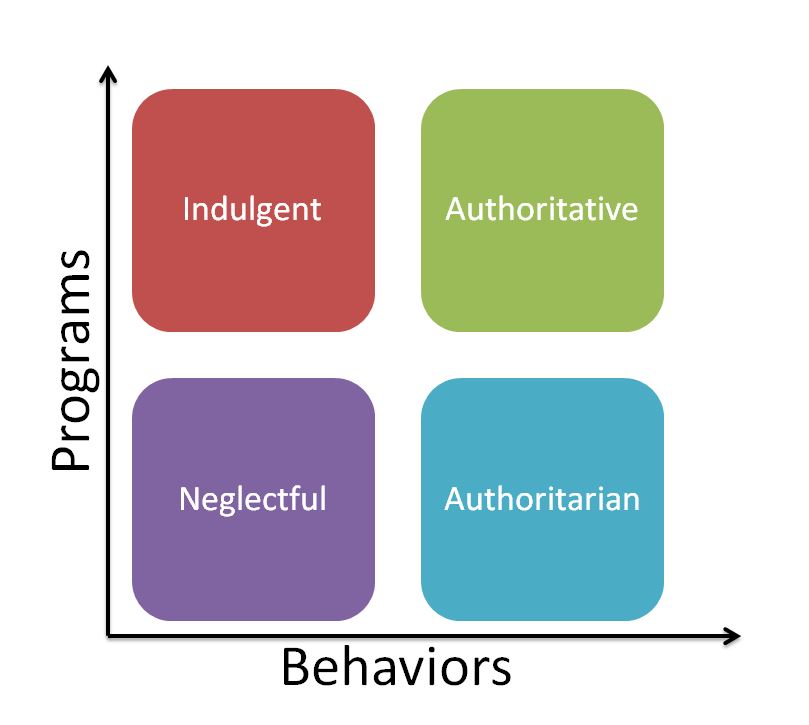
So far, I spent two postings just leading up to the actual chart that creates this entire series of posts.

The purpose of these sets of posts is to look at the characteristics of parenting versus safety and how those two are interrelated.

SafetyPgmsBehI will openly admit that I was conducting a one man think tank and proposing the simple of question of “What would an organization look like if they no programs and no safe behaviors and the variances therein?”  As continued thinking through this philosophy off and on, I started to see some real similarities between Maccoby and Martin’s Four Parenting Styles based on Baumrind’s Three Parenting Styles and my four-quadrant system. In the sake of full-disclosure, my mind may have been influenced by just studying that theory and helped in bridging that gap. Either way, I felt there was enough correlation to dig a little deeper.

As a introduction to these ideas, here is a brief overview of the four typologies.

Neglectful = A system where there are no safety programs and no expectations for safe behaviors. The organization is no engaging any aspect of safety or safety management.

Indulgent = A system where there are good programs but no expectations to follow those programs. The system is there, but no one really cares it is there.

Authoritarian = A system where the employees are held extremely accountable but there are no programs or training to empower them in the process.

Authoritative = An organization that has robust training and programs along with holding everyone consistently accountable for their actions.

In part 4, I will take a deeper dive into the Neglectful typology.

Weekly Safety Roundup – 5/17/15

The big news of the week was DuPont being fined for the multiple fatality incident from November of last year. There were many questions of how the employees entered the space, how the space filled with gas, why the rescue efforts failed, and how did the equipment malfunction. From the article and a summary of the OSHA citations, it appears that there were a number of failures from all those aspects. The key take away for me was that when non-standard conditions come up, there has to be a process to evaluate the risk and change the way the work is being done.


A man that was using a bucket as a bathroom was found dead due to carbon monoxide poisoning. The worker was with a traveling group that pressure washed remotely. Because they did not have facilities, they kept a bucket in the back of the truck to act as a bathroom. The back of the truck also had the gas powered pressure washer. The back of the truck filled with fumes as he was using the bucket. His co-workers found him unconscious. A sad lack of planning from the company’s part by not providing the right bathroom or the right ventilation.


A surveying company was fined by OSHA after one of their employees died on the job from a bear attack. Hazards present themselves in various ways. Taking time to perform a strong Job Safety Analysis or Task Hazard Analysis can be of great assistance in preparing for the work that is about to be performed.


A man was fatally killed during a lawn mower incident but OSHA proposed no citations. One of those facts about OSHA is that if you are working exclusively for yourself, OSHA does not cover that business. This lawn care company was owned by the individual that was killed, and he was the only employee. During the investigation, OSHA could not cite based on that aspect of the law.

Typologies of Safe Behaviors and Safety Programs – Part 2

As discussed in Part 1 of this theme of posts, I started thinking/daydreaming about how to quantify behaviors and programs as they relate to safety. I had previously been interested in the typology of parenting just for personal interest. One morning while making the morning commute, the two began to merge and take some shape. So, I felt the best place to discuss the similarities would be through my blog.

The big question is, “How did I merge these two seemingly unrelated topics?”

One of my biggest pet peeves is the manager that says “safety is just common sense.” It is this thinking that gives the safety profession such a poor name. There are companies that believe that safety is something that is nothing but lip service and common sense. I have a previous post where I really get on that soapbox, so I will spare that rhetoric on this one. The truth is that safety is learned. There is no other way. Even from a early man kind of thought process. There are those that made mistakes that cost them life and limb and then there are those that saw it go bad, made a logical choice to do the same thing, then told others about the problem. I love the history of the chemical elements. It is amazing how the elements were discovered, tested, and utilized. The history of chemistry is rich in safety stories such as these. Early chemists/alchemists used mercury for many experiments and processes. It was through their liberal use, the the rest of the chemical community learned that safety precautions need to be taken in order to prevent going crazy due to the heavy metal building up in the brain. It was the early work, illness, and death of the scientists with the discovery of radionuclides that helped shape safety policy today.

Safety is learned. It is not common sense. It has to be trained and utilized for it to have value for the user.

Another example of how safety is not just common sense relates to hunter safety. Many believe that hunting and fishing are an innate human function that is in correlation to have good real life common sense. The truth is that before someone goes on their first hunting or fishing trip, they are instructed on the safety and methods of the process. Gun safety is of course a number one priority of the education. It also includes, how to protect while in a tree (fall protection), how to field dress the animal (knife use), and moving the animal back to camp. No one is born with this knowledge. It is taught and learned.

The same should be said with any industrial process. Safety is taught and learned. It may seem like common sense for someone who has done it for years, but for others the knowledge is new and unpracticed. A seasoned fortruck operator should know that seat belts are required, how to safely move a load, and how to perform a pre-use inspection. For someone who the process is new to, they need that instruction to help gain that first time information. How would someone know to lockout a machine before maintenance if they had never been instructed? How would someone know how to safely enter a trench if they had never been instructed? It is these same reasons why the statement, “that’s just the way we’ve always done it.” can be so troublesome. Just because that method has seemed to be the right way to do it, does not mean it is. By working toward knowledge and improvement, the safety systems are learned and evolved.

As a parent, I see that it is my job to not instruct my children like a teacher or instructor. It is my job to give them good guidance and information so that they can make good decisions, apply that knowledge, and be safe and successful. If I give my kids lists and lists of dos and don’ts for road safety, they will never take in the essence of the goal of safety. They will use the lists and the one and only method for being safe. If I instruct them to look for the hazards, how to spot the hazards, and the basics of how traffic works; they have a better opportunity to engage that activity with a safety consciousness. Don’t misunderstand, there needs to be hard and fast rules for the road. There also has to be an innate ability to take good information and apply it to a situation to make a good decision. As a parent, there are four typologies that I can fall into based on my style of raising my kids.

When the comparison is made between being a parent and being a safety manager, there are many similarities. Each role is about instructing, improving, and empowering others for safety and success. To me, safety is a life skill that is as important and critical as any other topic. So, the distance to bridge the idea that the four parenting typologies could be used to describe safety is not that large of a gap. They have many similarities especially considering the way that each should be presented. Once we really start diving in to the typologies, the similarities will continue to present themselves, the process will become more apparent, and the overall theme will crystallize. In the next post, I will give an overview and better define of the four parenting typologies.

Safety News of the Week 5/9/15

Fortune published an article about the antiquated OSHA penalties and how that affects the safety of workers. This article begins by citing the low fine Wal-Mart received from the Black Friday trampling death from a few years ago. Certainly, the worker should have been protected. I still, though, have a much larger issues with that fatality. This was not only about occupational safety, but being a decent human being. I still cannot wrap my mind around how any one or group could trample someone to death to buy cheap electronics for Christmas. Well . . . back to the article. It does gives some interesting information about the laws that are trying to get put into place to give OSHA more teeth when it comes to fatalities. Overall, there are improvements that need to happen to update and create consistency in the OSHA fines system. Unfortunately, this literally takes an act of Congress.


On the flip side, another article from this week shows the progress that the OSH act for worker safety. It is a good read that shows that there has been significant effectiveness since the act was passed. I will certainly say I am happy for it, not only because it protects workers but because it created work for someone like me. Certainly, OSHA and the laws that they enforce has helped in creating a safety workplace. There is still much more that needs to be done to assure the safety of workers. There should be a sense of pride in those workplaces that have got on board with creating a safe working environment. Now it is time for keep pushing all industries for that level of compliance.


A federal judge not only upheld a willful violation, but increased the fine against the company. The construction company was cited due to a fatality from a crane that collapsed. The company continued to fight the citation only to come up against a judge that basically said enough is enough. It is a strong message sent to those that would follow suit that fighting a citation will not only cost you in legal costs but could even increase the penalty.


OSHA is considering how to address the health and safety of transgender workers. The initial focus appears to be on restroom access. According to the article,  “OSHA and National Center for Transgender Equality announced an alliance Monday to develop a bulletin of recommended best practices for restroom access for transgender workers.” Certainly, the additional focus from OSHA will help in bringing attention to these issues.

Typologies of Safe Behaviors and Safety Programs – Part 1

As I was going through a class on child development, a theory really stuck with me in regards to classifying styles of parenting. The theory was Baumrind’s Parenting Typology. I enjoyed and studied the four quadrant version that was expanded by Maccoby and Martin. In this typology, there are four basic parenting types based on: Responsive vs Unresponsive and Demanding vs. Undemanding. So in these cases a parenting style could be Responsive and Demanding or Responsive and Undemanding. The same options are then available for Unresponsive in the same way. This creates four typologies that represent the parenting styles: Indulgent, Neglectful, Authoritative, and Authoritarian. This theory was interesting to me simply because I am a dad, and I wanted to see how I could become a better parent (or maybe just see what my parenting style may ultimately do to my kids).

So . . . how does any of this relate to a safety blog and theory? How did I tie parenting and safety together?

It began with the creation of a training program for leadership behaviors in safety. There appeared that there are two key initiatives in safety: programs and behaviors. There are good behaviors vs poor behaviors and good programs vs poor programs. The in world of safety there can be a combination of each. My thoughts were what would a site look like that had combinations of the variables above. How could those be categorized? How would they function? What were some of the tell-tale signs of the groupings? These thoughts would come and go during my commute. One day it struck me that the four typologies that I was seeking were very similar to those that were listed in the parenting theory. This revelation helped fuel this series of blogs.

The best introduction to the process is to give some definition of behaviors and programs. These are the two items that made me really start thinking about what does a site look like as they have combinations of the two.

Behaviors: Think of this term as how all the employees behave with safety. Are they aware of the work they are doing and how it can be done safely? Do they work in a way that prevents injury? Are they self-correcting items? Do they focus on preventing incidents to themselves and the team?

Programs: This includes the written programs, policies, safety analysis, sampling, auditing, and training. Are the programs written, functional, and understood? Does the team know the policies and how to comply with them? Is the training adequate and regular? Is there investment to revise and improve the programs?

Certainly, there is always room for the gray areas. With good programs, there should be some push for good behaviors.The overall theory is not to look inside each category, but to give an overall macro view of the system. If there was a location that had very strong programs but very poor behaviors, this would create an interesting case study of why this phenomenon would occur. There has to be an underlying meaning to why something at the very top of one category would allow the other to be at the very bottom. It is an interesting thought theory but in practical cases when one improves with deliberate attention, the other should follow with some measure. As you can imagine, behaviors are the hardest to influence positively, takes time to improve, and can erode the quickest. Programs help drive behaviors in both positive and negative ways. There is a causal effect between the two. I am not going to focus on as much about the causes as much as focus on what each category looks like and how those appear in the over arching safety management system.

The focus of the next series of blogs is to better define the four quadrants of this process, and how I correlate those to the parenting typologies. It should be a fun journey.


Weekly Safety News Roundup 5/2/15

A trenching death creates a hazard for the rescue crew. A trench fell in and the rescue was slowed because the rescue crews has to shore up the sides before they could begin the extrication. This definitely is a case where the trench was not properly protected before the worker entered. Trenching issues are very common. For some reason, there are still companies that treat trenching and excavation as “just digging a hole.” There is so much more to creating a safe environment for workers when it comes to this standard. There are many considerations that have to be made when performing the work such as rescue and soil content. These injuries are preventable through training, planning, and proper rule adherence.


Dollar Stores are under various OSHA investigation for not creating a safe workplace. According the the article, it seems to be a regular occurrence among Dollar Stores where exits and aisles are blocked. This creates an environment where is there was to be an emergency the workers may not have a safe way to exit the store. The interesting point of the story is that it cites management not walking the stores as a source of the trouble. This is an interesting dynamic when you think about the interactions that are going on with this scenario. The employees are unpacking boxes or stacking boxes in ways that are blocking exits. In essence, they are creating an issue that could be easily avoided by not stacking boxes in the front of the exits. There is a reason they are performing an action that could endanger their own life. It could be that they don’t have enough room for boxes, it could be they do not understand the importance of keeping a clear exit, it could be that the employees don’t have enough time to correct the issues. The idea that management walks not being effective could be a root cause, is plausible. The management should train the employees to know why not to block the exits. They should set and enforce the standards. They should also give the employees the time and resources to get the job done right.


OSHA finally issues a confined space rule for construction. This is a long time coming. General industry has had a fairly robust program in place, but there was no specific guidance for construction. It was time that construction has the same protection as industry.


SeaWorld is fighting their OSHA violation from the death of a whale trainer in 2010. OSHA (of course) does not have specific guidance on whale training safety, but they do have the ability to fine a company based on the general duty clause. In this case, OSHA stated that they felt SeaWorld did not provide adequate training for their staff in regards to the work they are performing and the safe guards that should be in place. This shows that just because there is not a regulation, there still has to be safety precautions in place to protect workers from occupational illness and injury.


An interactive map shows occupation fatalities by location. An interesting and sobering tool.

The Hierarchy of Safety Needs, Part 8

Over the course of eight posts and a few detours along the way, we have explore that safety behaviors can be quantified in a similar fashion as Maslow’s Hierarchy of Needs. There are reasons that are based on basic needs that demonstrate why safety cultures may be moving forward, falling behind, or remaining stationary. There are basic needs that have to be met to allow a safety culture to progress within an organization.

Maslow’s Hierarch of Needs is a good model to predict behaviors based on what need are being fulfilled. When the needs based approach is applied to only the occupational safety area there are many striking similarities. The safety behaviors of a company and be interpreted using a needs based approach. If the needs of the more basic function are not met, the behaviors will mirror and be driven to those needs. A company cannot create a good safety culture without working to assure that the basic needs are met. The most basic, largest, and more energy driven phases of the safety hierarchy are driven primarily by the company management. They have an inherent social contract with the team to first provide gainful employment and to also provide a workplace that is free of serious health and safety hazards. Without the primary needs being met, the company cannot expect safety behaviors to be changed in a meaningful and productive way. As the employees and management fill the lower tier needs and start to shape progressive behaviors, there has to be an acute cognizance of threats to the basic foundation of the pyramid. When threats are encountered, there has to be more effort to mend the foundation or acceptance of the changes in perceptions and behaviors. Overall, the needs based approach to safety delivers insight to why employees may have trouble altering or progressing safe behaviors.

Just as humans have basic needs that have to met for social progression, the world of safety if similar. When considering a company, safety is the most people oriented metric. With that being said, people in groups have social and primal needs that have to met for progression. It cannot be expected that a company can set high expectations without equally empowering their team for success.

In the next series of discussions, I am going to look at the link of programs and behaviors and how those two items can be quantified using a similar typology.

Bumble Bee Foods, Two Managers Charged in Death of Man Cooked With Tuna

I remember when this event happened.This was a significant learning opportunity for many organizations across the food industry.

I would like to know more about the evidence that charges the two men in the case. As the article says, prosecutions are rare.

Click here to see the statement from the company. According to their release, there were no willful OSHA violations committed in regards to the incident. It is interesting that that DA is now filing charges.

This strikes a very personal point for me. As a safety professional, I do feel a lot of responsibility and accountability. But, am I ultimately responsible for all aspects of safety? I am not sure that is humanly possible. Again though, time and evidence will tell the story.

foodsafeguru's avatarUS Food Safety

LOS ANGELES — Bumble Bee Foods and two managers were charged by Los Angeles prosecutors Monday with violating safety regulations in the death of a worker who was cooked in an industrial oven with tons of tuna.

Jose Melena was performing maintenance in a 35-foot-long oven at the company’s Santa Fe Springs plant before dawn Oct. 11, 2012, when a co-worker, who mistakenly believed Melena was in the bathroom, filled the pressure cooker with 12,000 pounds of canned tuna and it was turned on.

When a supervisor noticed Melena, 62, was missing, an announcement was made on the intercom and employees searched for him in the facility and parking lot, according to a report by the California Division of Occupational Safety and Health. His body was found two hours later after the pressure cooker, which reached a temperature of 270 degrees, was turned off and opened.

The company, its plant…

View original post 151 more words

Weekly Safety News Roundup – 4/25/15

A Michigan plastic injection molding plant received a huge fine following the death of a worker. The worker was crushed while performing  maintenance and another employee cycled the machine resulting the fatality. A willful set of violations including basic lockout tagout was cited. Such an unfortunate death with two sets of lives forever changed. The man who was killed had a family. They have to go on without their father and husband due to such a preventable incident. Unfortunately, there is another side to the incident. The other employee who thought they were doing a typical job by turning on the machine, I would suspect, has a different approach to safety and the job now. In many training seminars, I talk about that even though a process may not be the individuals fault there will be a level of remorse if it leads to an injury. I use this thought process especially when training fork truck operators. When a fork truck comes into contact with a pedestrian, the pedestrian loses every time. As a fork truck operator, they should always be as hyper-aware of pedestrians as possible. It could be the pedestrian’s fault for stepping out into traffic without looking, but the operator of the fork truck will have the remembrance of the incident. Injuries affect all workers in some ways. Safety is very much about not only the individual, but the team effort. In the above news story, it is a shame that the lack of company policy and enforcement led to this situation that forever changed two families.

On a separate note, the fine was for 558K while the revenue for that company was estimated at 35M. That equates to 1.6% of the revenue as a fine.


A New Hampshire company was fined for exposing employees to chemicals. The particular chemical was methylene chloride which is a specifically listed chemical in the OSHA regulations There have been many claims that OSHA should be granted the availability to quickly make updates to their chemical listing of specific chemical safety. In this case, this chemical was already listed. A listed chemical has significant regulations of how to monitor and protect employees. The company in question was previously cited by OSHA. For what? Chemical issues. It seems that some have difficulty understanding that the law is the law.


A house bill requests that employers have the opportunity to abate OSHA findings before getting fined. This is an interesting idea that an employer could receive a reduced fine by quickly fixing issues. It does beg the question, though, would some employers use it as an excuse to ignore safety issues. If they know they can fix it after it is cited, would they delay making the right decisions. I have also pondered the question of when the next evolution of OSHA will require full-time onsite officers for companies much like some USDA, FDA, or even accounting firms have today.


Better late than never, I guess. April is/was distracted driver month. This is such an important topic for both workplace drivers and at home. It is important that employers adopt a program that outlines its safe driving practices. At home, it is important that parents not only explain the necessity for not texting and driving but also set the example and hold teenaged drivers accountable. Again, an accident can affect more than one life. Texting can wait, it is not worth the risk.